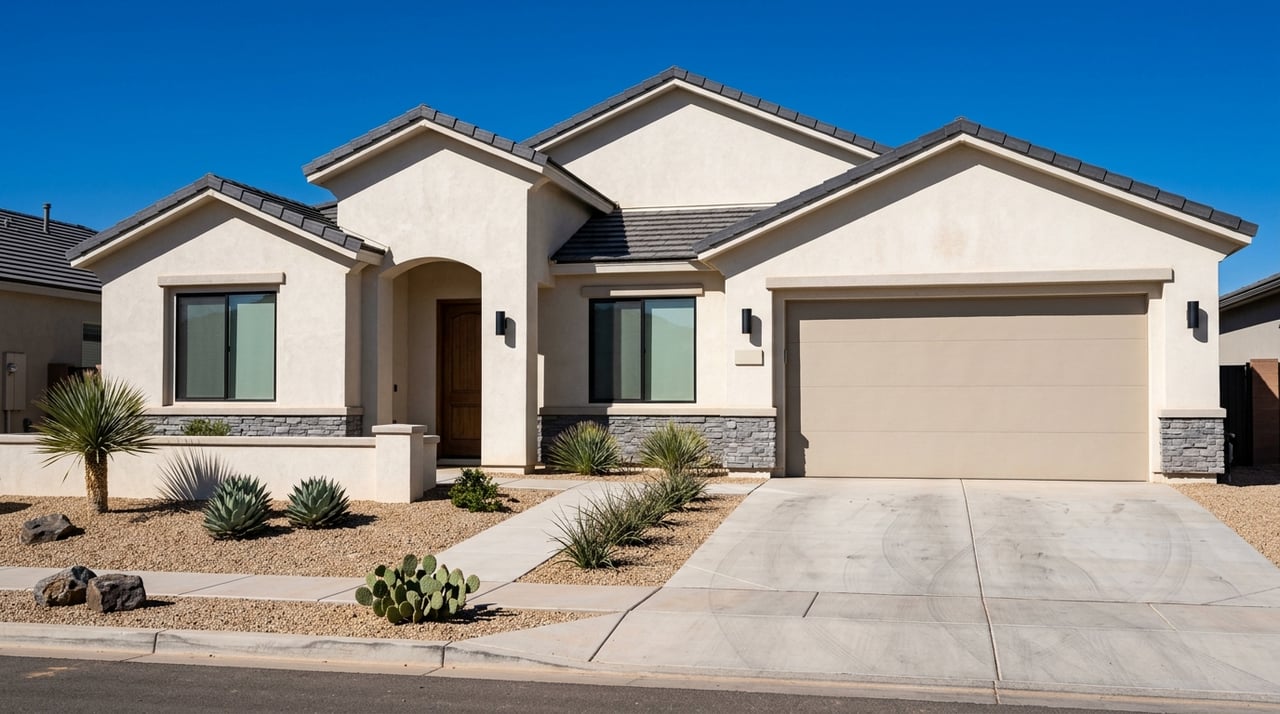
Wondering how to choose the right part of Kingman when local "neighborhood" names do not always tell the full story? That is a common challenge here, especially if you are relocating, buying your first home in the area, or trying to balance commute time, lot size, and lifestyle. The good news is that Kingman becomes much easier to understand when you compare it by corridor, housing form, and access to services and recreation. Let’s dive in.
Why Kingman feels different
Kingman does not fit neatly into a simple neighborhood map. The city’s planning tools point more clearly to growth areas like Downtown, West Beale Street, Bank Street, Grace Neal Parkway, North Stockton, Rancho Santa Fe, Santa Rosa, and the Airport area.
That matters because a home search here is often less about picking a branded neighborhood and more about choosing the setup that fits your life. In practical terms, you will want to compare things like lot size, zoning, road type, utility access, and how close you are to the service corridors you use most.
How to compare Kingman areas
A smart Kingman home search usually starts with a few basic questions. Do you want an older area with mixed-use surroundings, a more service-focused corridor, a larger parcel, easier access to trails, or proximity to major roads for getting around town and beyond?
Kingman’s maps are useful because they separate land use, zoning, road types, and even road conditions. That gives you a more grounded way to compare homes than relying on a neighborhood name alone.
Look at corridor access first
Kingman sits where Interstate 40 meets US 93, and Mohave County describes the city as a major highway and rail access point. If you care about predictable drives for errands, work, medical visits, or trips out of town, that transportation framework should be part of your decision.
The most important service corridors are Beale Street, Stockton Hill Road, Kino Avenue, Airway Avenue, and the airport area. A home that looks similar on paper can feel very different day to day depending on which corridor it connects to most easily.
Check housing form and lot size
Kingman’s zoning includes several single-family categories, attached housing, multi-family, rural residential, manufactured-home districts, and T3, T4, and T5 categories. In other words, the type of home and the land around it can vary a lot from one part of town to another.
If you want a smaller lot and a more connected street pattern, one area may fit better. If you want a larger parcel or a more rural feel, your search will likely shift toward outer-edge locations.
Verify roads and utilities
This is one of the most practical parts of shopping in Kingman. The city tracks paved and unpaved segments, along with road conditions labeled good, fair, or poor.
The city also tracks subdivided vacant properties with access to city utilities. That can be especially important if you are considering an infill lot or a property closer to the edge of town.
Downtown and Historic Route 66
If you want historic character and a more mixed-use setting, Downtown Kingman is the clearest fit. The Kingman Commercial Historic District covers the 300 and 400 blocks of East Andy Devine Avenue, and the broader downtown area ties into the historic Route 66, Powerhouse, museum area, and Mohave Museum on West Beale.
This part of town stands out for older commercial blocks, a traditional core, and stronger mixed-use patterns. The city’s general plan also identifies Downtown as a growth area and includes T5 Main Street and T5 General categories, which support the idea that this area is a better match for older homes, small-lot infill, and a more connected urban pattern than for large-lot suburban housing.
Best fit for downtown buyers
Downtown may appeal to you if you want:
- Historic context and older streetscapes
- Access to museums and the Route 66 core
- Smaller lots or infill opportunities
- A more mixed-use environment
If you prefer larger parcels, newer subdivisions, or a quieter edge-of-town feel, other corridors may be a better match.
North Stockton and service access
For many buyers, convenience matters more than a neighborhood label. The North Stockton corridor stands out because Kingman Regional Medical Center is on Stockton Hill Road, while several county offices are concentrated along Beale Street, Kino Avenue, and Airway Avenue.
The city’s general plan names North Stockton as a growth area, and zoning around major service corridors includes low-, medium-, and high-density residential, along with attached and planned-development options. In simple terms, this area often works well if you want to reduce cross-town errands and stay closer to medical and civic services.
Best fit for North Stockton buyers
This corridor may be worth a closer look if you want:
- Easier access to medical care
- Shorter drives to county offices and daily services
- A location tied to a major north-south route
- More housing-format variety near service corridors
Hualapai Mountain Road corridor
If your ideal Kingman lifestyle includes easier access to mountain recreation, the Hualapai Mountain Road area deserves attention. The city’s zoning specifically references Hualapai Mountain Road and Hualapai Mountain Medical Center, and the general plan identifies Grace Neal Parkway as a growth area.
A major draw here is Hualapai Mountain Park, a Mohave County park about 15 miles east of Kingman at roughly 6,500 feet. The park offers hiking trails, cabins, and seasonal camping, and the route down Hualapai Mountain Road drops about 3,100 feet into the basin around Kingman.
What this corridor means day to day
This area can be a strong fit if you want quicker access to cooler mountain recreation and trail time. At the same time, you should be comfortable with elevation change and how that can shape the drive between home, town, and the park.
For some buyers, that tradeoff is worth it. For others, a flatter in-town corridor may be easier for everyday routines.
West Kingman and larger-lot areas
West Kingman, including areas tied to the Cerbat Foothills and outer-edge sections like Coyote Pass, often attracts buyers who want more space and a less central feel. The Cerbat Foothills Recreation Area is about 11,300 acres, sits roughly a mile from downtown, and includes four trailhead access points with more than 36 miles of trails.
On the housing side, the city’s zoning map includes rural residential and manufactured-home districts with 20,000- and 40,000-square-foot lot standards. That helps explain why west and outer-edge areas are often where you find a larger, quieter, and more rural feel than in downtown or North Stockton.
What to check in west-side areas
If you are looking west, be sure to verify a few practical details:
- Whether the approach road is paved or unpaved
- The recorded road condition
- Lot size and zoning district
- Utility access if the property is near the edge of city development
Those details can have a real impact on daily convenience and long-term plans.
Airport and south-side edge
The airport area functions differently from the rest of Kingman’s residential search zones. The Kingman Municipal Airport and Industrial Park spans about 4,000 acres, includes two active runways, has about 150 operators and 250 aircraft in storage, and operates as a distinct city sector with industrial-park land and lease opportunities.
The city’s general plan also identifies a Kingman Airport Growth Area. For most residential buyers, this area is less about historic character and more about adjacency to aviation infrastructure, industrial activity, and broader transportation access.
Who might consider this area
This part of Kingman may make sense if you value:
- Access to aviation-related infrastructure
- Proximity to industrial and transportation activity
- A location tied to a distinct growth sector
If you are seeking a classic historic core or trail-centered foothill setting, another area may line up better with your goals.
Growth areas to watch
Names like Rancho Santa Fe, Santa Rosa, Bank Street, West Beale, and Downtown are best understood as planning signals. They tell you where the city expects or guides growth, but they do not always function like finished neighborhood brands.
That is why it helps to ask what subdivision, zoning district, and utility status you are actually buying into. In Kingman, growth-area names are useful, but they are only one piece of the bigger picture.
Recreation can shape your choice
One of the easiest ways to narrow your search is to think about the kind of recreation you want closest to home. In Kingman, the options are meaningfully different.
You might prefer the downtown Route 66 and museum setting, the nearby Cerbat Foothills trail system, or the cooler mountain environment at Hualapai Mountain Park. Those lifestyle anchors can be more helpful than broad neighborhood labels when you are deciding where to focus.
Questions to ask before you buy
When you start comparing properties in Kingman, these questions can help you make a cleaner shortlist:
- What is the exact zoning district?
- Does that zoning match the home type or lot size you want?
- Is the property inside city limits?
- Does it already have city utility access?
- Is the approach road paved, and what condition is it in?
- Which service corridor will you use most often?
- Is the property in an established area or a growth area?
- Do you want easier access to downtown history, foothill trails, or mountain recreation?
These are the kinds of practical details that can make your day-to-day experience much better once you move in.
A simple way to narrow Kingman
If you want a quick framework, most buyers in Kingman end up comparing five broad choices. Those are downtown convenience and historic character, North Stockton service access, east-side mountain access, west-side larger parcels and trail access, or airport-area adjacency.
The right fit depends on how you want to live, not just what a listing calls the area. When you look at Kingman through that lens, the city becomes much easier to navigate.
If you want help comparing corridors, lot types, and practical lifestyle tradeoffs in Kingman or elsewhere in Mohave County, reach out to Lisa Turner for clear, local guidance.
FAQs
What is the best way to compare neighborhoods in Kingman, AZ?
- The most practical way is to compare Kingman by corridor, zoning, lot size, housing type, road condition, and access to services or recreation rather than relying only on neighborhood names.
What part of Kingman offers the most historic character?
- Downtown Kingman and the Historic Route 66 area are the strongest fit for historic character, older blocks, and a more mixed-use setting.
What area of Kingman is closest to medical services?
- The North Stockton corridor is one of the most service-convenient areas because Kingman Regional Medical Center is on Stockton Hill Road and several county services are along Beale Street, Kino Avenue, and Airway Avenue.
Where should buyers look for larger lots in Kingman?
- West Kingman and some outer-edge areas are often better places to look for larger parcels because zoning there includes rural residential and manufactured-home districts with bigger lot standards.
What should buyers check about roads in Kingman, AZ?
- Buyers should verify whether the road is paved or unpaved and review the city’s recorded road condition, especially in west-side or edge-of-city locations.
Are Kingman growth areas the same as neighborhoods?
- Not always. Names like Rancho Santa Fe, Santa Rosa, Bank Street, and West Beale are often better understood as planning and growth areas rather than fully defined neighborhood brands.