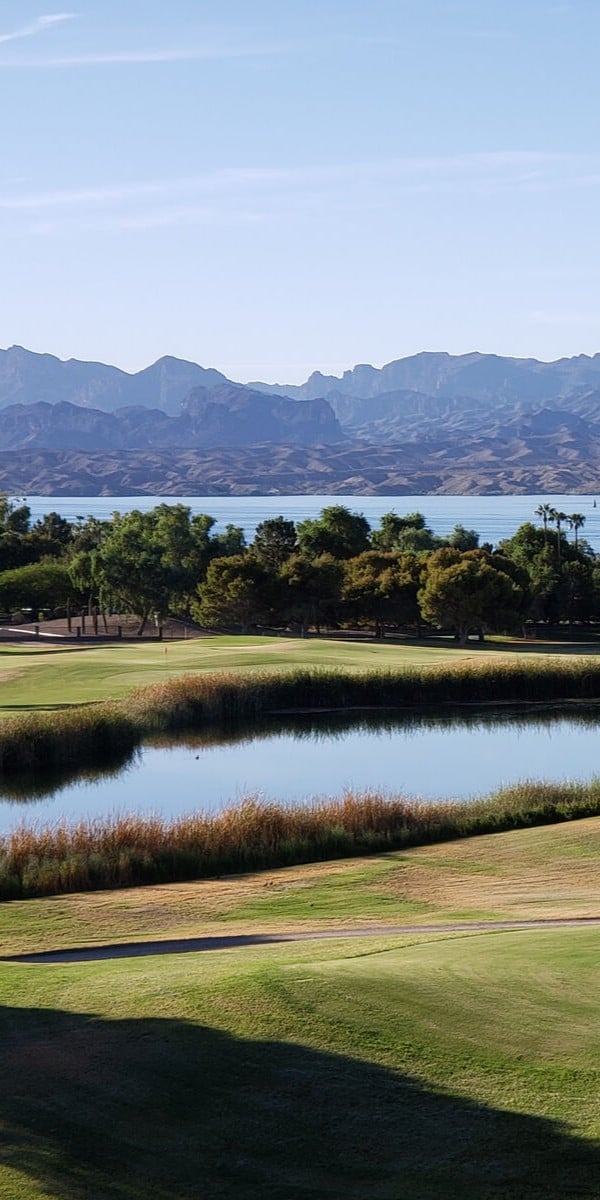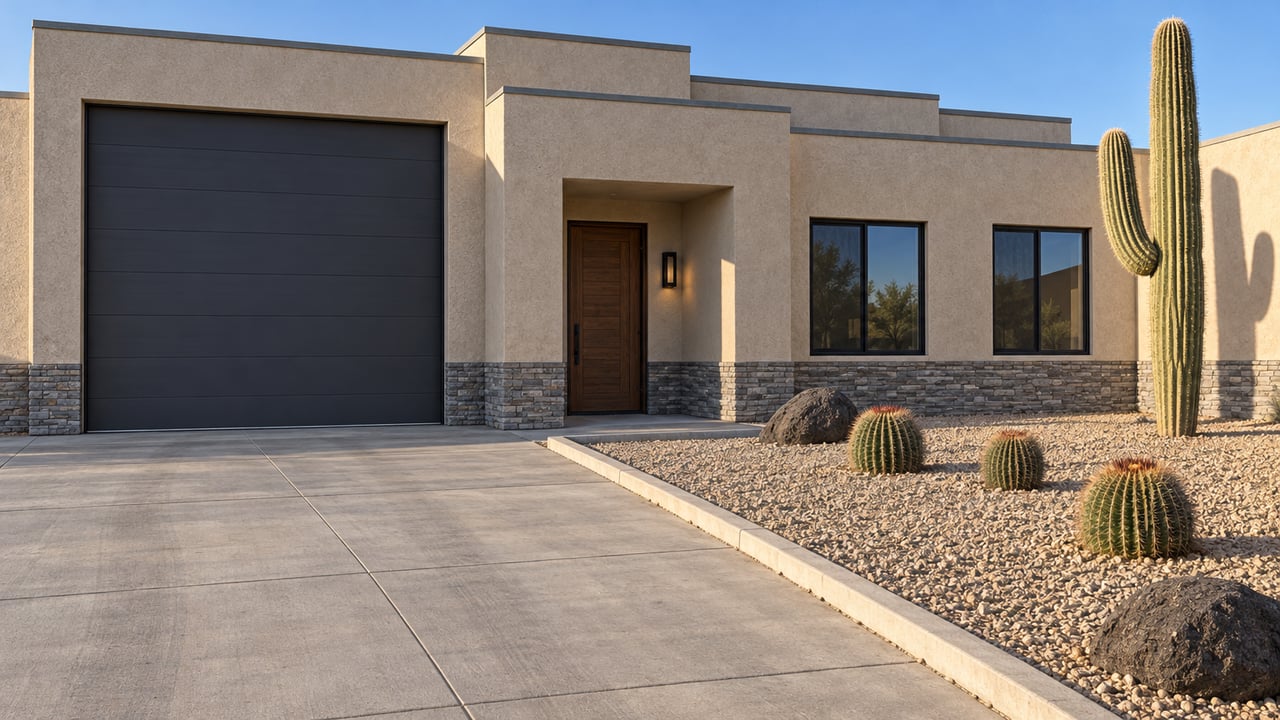
Picture a house on a Havasu hillside in late summer. The irrigation is off, the shutters are down, and the owners are 300 miles away. The water meter barely moves. A utility bill still shows up every month, and since September 1, 2026, its smallest possible total for a standard home is $67.69 before trash.
That amount is $12.45 for a 3/4-inch water meter plus a flat $55.24 residential sewer charge, under rates the Lake Havasu City Council adopted and the City lists on its current utility rate sheet. Neither charge depends on how much water the house uses. Both have been climbing on a published schedule, and the reason has more to do with property taxes than with water.
The assessment that used to carry the water system
For nearly 60 years, a big share of Havasu's water costs never appeared on a utility bill. The Irrigation and Drainage District, or IDD, was formed in 1963 and funded about $5.7 million a year in water operations and debt service through a property-tax rate of $268 per acre, according to the City's 2023 council file on the rate increase. Today's News-Herald puts the figure at $5.6 million. Its reporting traces the district back to the sod farm Robert McCulloch started before the city was founded, and notes that the IDD covered most of the city but not all of it.
The IDD expired in 2022, which the City described as "a significant financial loss to the City's water fund." The replacement came from Willdan Financial Services, which the City hired to write a long-term financial plan and a cost-of-service rate study for the water and sewer funds. On September 26, 2023, the Council adopted Resolution No. 23-3707, which set five years of water and sewer rates. The News-Herald called it "a shift from tax-based to fee-based infrastructure funding."
That shift matters when you compare homes. A per-acre property tax charges the land, and the land owes it whether the house is full or empty. A utility fee lands on the meter and the sewer connection, and those also bill whether the house is full or empty. Either way, the cost of owning a home that is empty part of the year keeps arriving. It just moved from the tax bill to the utility bill. When a buyer compares older tax records with today's, that piece of the cost seems to vanish from the tax column and only shows up on the monthly statement.
What the schedule has already locked in
Most rate changes are a surprise. These aren't. Resolution 23-3707 printed every year's rates ahead of time, through September 2027:
| Rate year | Effective | 3/4" water base | Residential sewer base | Fixed monthly total |
|---|---|---|---|---|
| FY 2024 | Nov. 1, 2023 | $9.02 | $52.14 | $61.16 |
| FY 2025 | Sept. 1, 2024 | $10.10 | $52.14 | $62.24 |
| FY 2026 | Sept. 1, 2025 | $11.21 | $52.67 | $63.88 |
| FY 2027 | Sept. 1, 2026 | $12.45 | $55.24 | $67.69 |
| FY 2028 | Sept. 1, 2027 | $13.82 | $56.86 | $70.68 |
At current rates, the fixed charges alone come to $812.28 a year. Under next year's schedule, that becomes $848.16. One News-Herald story on the increases places the $9.02-to-$10.10 step a year later than the resolution does. The dates in this post come from the resolution and the City's current rate sheet, which match each other.
The timing explains why this is a live topic in October. The City bills in arrears. Its 2023 council file noted that the December bills would be the first to show rates that took effect November 1. Under that same arrears billing, September 2026 usage at the new rates lands on statements around now, just as part-year owners start heading back.
Where the increases actually landed
The fixed charges are only half of it. The volume tiers have risen faster than the sewer base. Between FY 2024 and FY 2027, the 3/4-inch water base rose about 38% and the residential sewer base about 6%. The residential volume rates went up roughly 28% at every paid tier. The 301 to 1,500 cubic foot tier went from $1.95 to $2.49 per 100 cubic feet, and the over-5,000 tier went from $3.29 to $4.20. The first 300 cubic feet each month still cost nothing.
Here is what that does to three monthly usage levels for a single-family home on a 3/4-inch meter, worked from the published schedule. These totals leave out trash and any backflow charge.
| Monthly use | FY 2024 | FY 2027, now | FY 2028 |
|---|---|---|---|
| 0 to 300 cf, vacant or barely used | $61.16 | $67.69 | $70.68 |
| 1,500 cf | $84.56 | $97.57 | $105.48 |
| 5,000 cf | $169.96 | $206.42 | $232.53 |
A lightly used home pays mostly fixed charges, which make up about 69% of the 1,500 cubic foot bill. A heavy-irrigation month is a different story. At 5,000 cubic feet, the bill has grown by about $36 since FY 2024, and the FY 2028 schedule adds another $26. City Manager Jess Knudson told the News-Herald the structure has put "a far greater focus on the connection between the water residents use and the amount of money they pay each month."
Meter size changes the fixed charges too. A 1-inch meter carries a $20.78 monthly base now and $23.07 in FY 2028. A home with a separate irrigation meter pays only one base charge, on the domestic meter. Usage from both meters is combined for billing. The rate sheet also lists a $6.00 monthly charge for each backflow preventer. Trash and recycling come from Republic Services, listed at $25.00 for weekly residential service.
Condos pay the same sewer charge as houses
Condo owners felt the move to fees most sharply on sewer. In November 2024, the per-unit sewer base for multi-family residents rose 179.27% to match what single-family homes pay, according to the News-Herald. Today the resolution charges "Multifamily, Condo, Apt" units the same $55.24 per dwelling unit as a detached house.
Down by the London Bridge, a small condo that someone uses a few weeks a year carries the same monthly sewer base as a four-bedroom house in Havasu Riviera. How that charge reaches the owner depends on the building. Some associations pay utilities from dues, and some units are billed one by one. The way a building bills shows up when you look at its HOA budget or the seller's statements.
The $40 line on the rate sheet
The rate sheet lists one charge aimed squarely at part-year owners: a "Vacation Sewer Rate" of $40.00, compared with the standard $55.24 residential base. That's $15.24 a month less. On the City pages we reviewed, we couldn't find the rules for who qualifies, how to request it, any minimum time away, or whether the water base still applies. City utility billing staff are the ones who can answer those questions. Treat any estimate that assumes the lower rate as unconfirmed until they do.
A seller's actual statements tell you more than any rate table. Three things are worth getting during due diligence:
- Twelve months of City water and sewer statements, which show both the occupied season and the empty months
- The meter size on the domestic line, plus whether a separate irrigation meter or a backflow preventer is billed
- Whether the account has used the vacation sewer rate, and in which months
The City also has a bill calculator for running other usage levels against current rates.
Where the published schedule stops
Resolution 23-3707 sets rates only through the year that starts September 1, 2027. Anyone holding a home past 2028 is looking at rates the Council hasn't set yet. In February 2026, the Council unanimously adopted the 2025 Water Master Plan, which plans out to 2040 and recommends a 10-year capital improvement roadmap. Knudson put the funding model plainly: "The city operates and maintains a not-for-profit water system and a not-for-profit sewer system, so the system relies solely on the fees that are collected."
The Colorado River is the other open question. Lake Havasu City holds a direct fourth-priority entitlement of 19,192.7 acre-feet a year, plus subcontracts through the Mohave County Water Authority. On August 21, 2026, the Interior Department announced operating guidelines for 2027 and 2028 that cut Lower Basin deliveries by 1.25 million acre-feet in each of those years. We found no City action tying that decision to a Havasu-specific cut, a new connection limit, or a rate change. Any rates set after 2028 will be decided with that federal decision already in place.
FAQ
Did the IDD's expiration lower property tax bills? The $268-per-acre IDD assessment ended in 2022. The sources we reviewed don't show how it appeared on individual tax bills, so the Mohave County Treasurer's records for a specific parcel are the place to check.
Does the City provide water outside the old IDD boundary? Yes. The City's 2023 council file describes its water and wastewater utilities as serving Lake Havasu City and surrounding areas outside the former IDD.
When is the next scheduled increase? September 1, 2027. The 3/4-inch base goes to $13.82, the residential sewer base to $56.86, and the 301 to 1,500 cubic foot tier to $2.90.
If you're pricing out a second home or a condo in Havasu and want a real picture of the monthly cost in the months you're away, Lisa Turner and our team can help you gather a seller's utility history and go through it line by line before you commit. Contact Our Lake Havasu Real Estate Experts.
This article is general information, not legal, tax or financial advice. Consult a qualified professional about your situation.