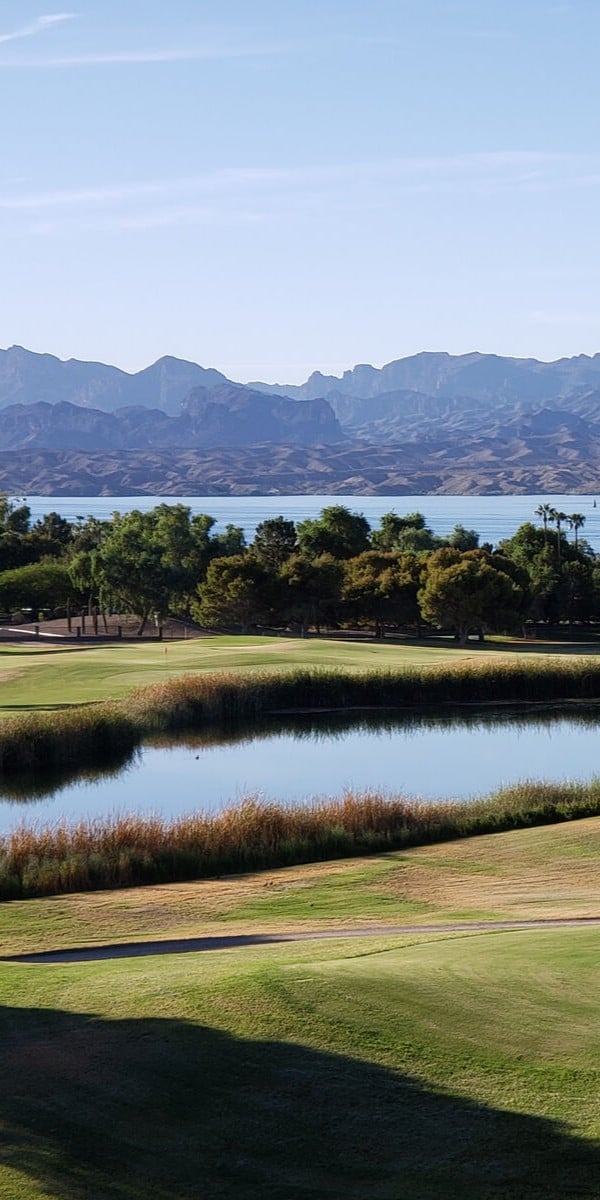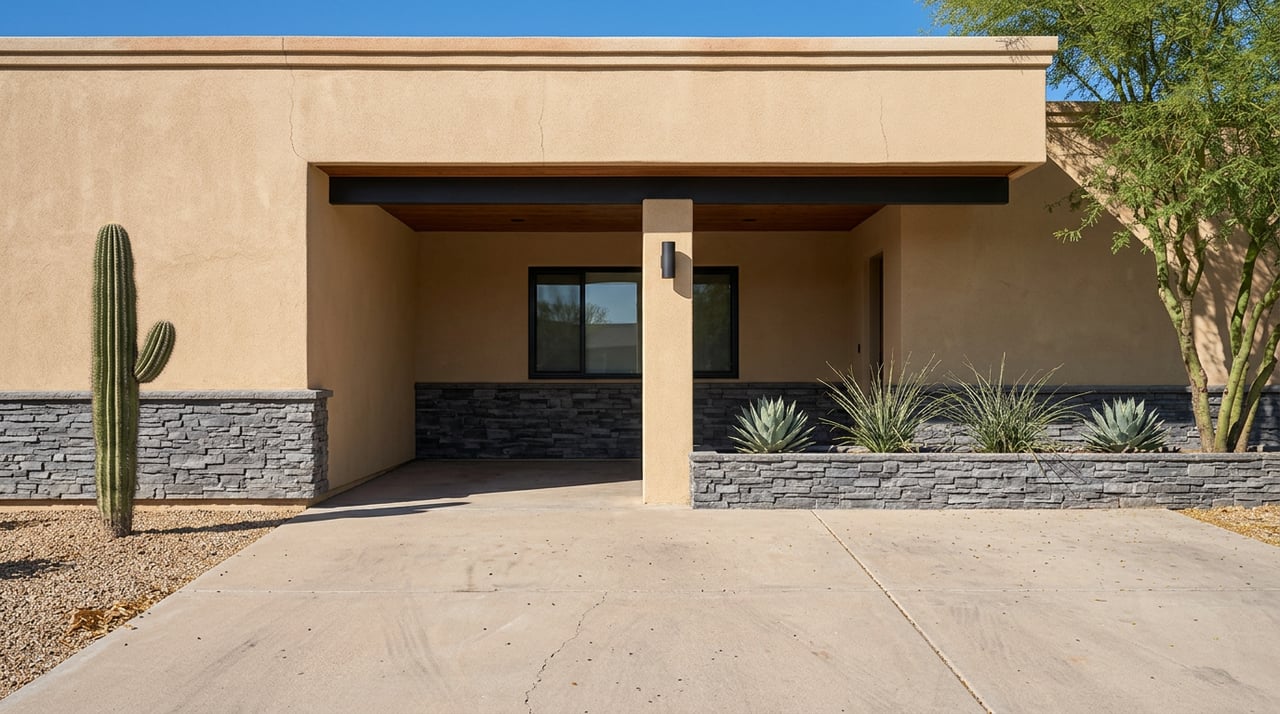
Two homes sit a quarter mile apart on the Parker Strip. Both face the river. Both have a dock, a covered patio, three bedrooms, and roughly the same square footage. One is asking in the mid $300s. The other is asking north of $700,000. The listing photos do not explain the gap. The MLS remarks barely do either, unless you know what phrases to look for.
The gap is almost never the house. It is the dirt under the house, and the number of years left on the paper that governs it.
The line item nobody puts on the flyer
A large share of what buyers picture when they picture "the Parker Strip" sits on land held in trust by the federal government for the Colorado River Indian Tribes. The Bureau of Reclamation's tribal water study describes the CRIT reservation as roughly 300,000 acres straddling the Colorado, with Parker itself sitting on a mix of leased tribal land and fee-owned parcels. That mix is the entire story.
Communities you will see repeatedly in current inventory sit on CRIT leased land: BlueWater Lagoon and Bluewater Lagoon Estates, Moovalya Keys, Moonridge, Plantation, and stretches of the Keys. Deeded parcels do exist. Hillcrest Bay listings advertise "deeded land" as a headline feature, and scattered lots inside the historic town of Parker were sold and patented before the modern reservation boundaries were finalized. Those two categories, deeded and leased, price and finance like different asset classes even when the houses on top of them are almost identical.
What the lease actually does to a transaction
The lease is not a background disclosure. It rewrites four things a buyer usually takes for granted.
Financing. A mortgage on leased tribal land is generally underwritten only to the remaining term of the lease. The shorter the runway, the smaller the pool of lenders and the shorter the amortization they will offer. Local practitioner accounts describe CRIT declining to subordinate to lenders in some communities, which is why so many Parker Strip riverfront listings are marketed to cash buyers and why "cash only" appears so often in remarks that would look strange on any other Arizona waterfront listing.
Transfer costs. Longtime owners in BlueWater Lagoon describe CRIT charging a lease-transfer fee in the neighborhood of 4.5 percent on resales. That is not a title fee, escrow fee, or commission. It is an additional friction that lives on top of the closing statement and comes out of somebody's proceeds.
Property taxes and lot rent. Land held in trust is not on the La Paz County property tax roll, so many owners on CRIT land pay no property tax on the parcel itself. The offset is lot rent, which is set by the master lease and its schedule. Some individual lots are effectively prepaid to zero for the remaining term. Others are current market. Forum accounts from Hidden Valley and nearby resorts describe scenarios where waterfront lot rent resets on renewal into the $700 to $900 per month range while an interior row sits closer to $300. Any pro forma that ignores that reset is guessing.
What happens to the improvements. This is the sentence buyers reread twice. Anything permanently affixed to leased land generally becomes the land owner's property when the lease ends. A double-wide can be pulled off and moved. A stick-built custom on a slab cannot. That distinction quietly explains why a large share of the Strip's newer inventory in leased communities is manufactured product on piers rather than site-built construction.
The clock everyone is watching
Master leases along this stretch were written on 99-year terms in a different era, and they are now inside the window where a buyer's holding period intersects with the expiration. Local sources put the BlueWater Lagoon master lease expiration around 2030, with the Big River area expiring roughly a year earlier. What CRIT will do at renewal, how much rent will step up, and which parks will be renewed in place versus taken back are open questions with no public answer today.
You can watch sellers pricing this risk in real time. One current Parker Strip listing tells you exactly what year the calculation runs to:
On leased land and seller is willing to pay off the lease through January 1, 2031 with an acceptable offer.
That is not a marketing flourish. It is a seller offering to buy down the buyer's biggest unknown so the deal will close.
What a deeded lot actually buys you
Deeded ground on or near the Strip is rare, and the pricing reflects it. The trade-off is not just "you own the land." It is a bundle of downstream effects worth pricing separately.
- Financing options widen. Conventional 30-year underwriting is available because the collateral is not on a clock.
- The improvement question resolves. A stick-built custom on deeded land is yours, full stop. Insurance and lender comfort follow.
- Property tax appears. You pay La Paz County like anyone else, which is often less than an equivalent lot rent on renewal but is not zero.
- Resale pool expands. Any qualified buyer can bid, not only cash buyers or the subset willing to underwrite tribal-land title.
None of that makes deeded the correct answer for every file. A second-home boater who plans to hold for six seasons, pay cash, and enjoy zero property tax may find a paid-off lot in BlueWater Lagoon the smarter economic choice than a comparable deeded home at more than double the price. The point is that the two paths should be compared on their own math, not treated as substitutes.
What the current market is actually telling us
Published local pricing for the Parker Strip in mid-2026 shows a median around $420,000 with a separate market-pricing signal closer to $647,500 and roughly $349 per square foot. That spread is not statistical noise. It is the deeded-versus-leased split, the on-water-versus-view split, and the manufactured-versus-site-built split all showing up in one number. For context, Arizona statewide sat at a $448,407 median with 67 days on market in May 2026 per Redfin's state tracker. The Parker Strip is trading around and above the state median in absolute terms while operating on entirely different underwriting rules.
The practical read for a buyer today: inventory is large enough relative to demand that you can afford to be picky, and the properties with the cleanest title story are the ones commanding the strongest pricing power on the way out.
Reading a Parker Strip listing the way an underwriter would
Before you fall for the patio, the dock, or the sunset shot, work the five questions that determine whether the price on the flyer is the price of the deal.
- Is the parcel deeded or on CRIT leased land? If leased, which master lease governs it?
- What is the current expiration date on that master lease, and what is the status of any renewal discussions?
- Is the individual lot rent current, prepaid, or subject to a reset schedule, and at what number?
- What is CRIT's lease-transfer fee on this community today, and who is paying it at closing?
- What is the improvement type, manufactured with the ability to relocate, or site-built and affixed?
A listing that answers all five in the remarks is a serious seller. A listing that answers none of them is asking you to price the risk yourself.
FAQ
Can I get a conventional mortgage on a CRIT leased-land home?
Sometimes, and typically only for a term that does not exceed the remaining lease. The pool of lenders is smaller than for deeded property, and many Parker Strip leased-land sales close in cash for that reason. Talk to a lender who has actually funded a loan on tribal-trust land before you write an offer.
Do I pay property tax on a leased-land home?
Generally not on the land, because it is federal trust land rather than county-taxable real property. You do pay lot rent under the lease, and that number can reset at renewal. The right comparison is total annual carrying cost, not the property tax line in isolation.
What happens to my house when the master lease expires?
It depends on the lease's renewal terms and on the nature of the improvement. A manufactured home can generally be relocated. A site-built home affixed to the land is a harder problem. This is the single most important question to raise with an attorney familiar with tribal-land transactions before you sign anything.
Which Parker Strip communities are deeded?
Hillcrest Bay listings frequently advertise deeded parcels, and some lots inside the historic town of Parker are deeded from pre-reservation patents. Most riverfront resort-style communities on the Strip itself, including BlueWater Lagoon, Moovalya Keys, Moonridge, and Plantation, are on CRIT leased land.
Ready to look at Parker Strip inventory with the lease math already run?
The right Parker Strip home is the one whose title story, lease clock, and improvement type line up with how you actually plan to use it. That is not a question the MLS answers. It is a conversation. When you are ready to have it, Lisa Turner and the Destination Havasu team read these listings the way an underwriter would, so you know what the price on the flyer actually means before you write the offer. Contact Our Lake Havasu Real Estate Experts to start the comparison.